SPOILER ALERT: Game of Thrones Season 5 Finale

If you haven’t spent the last four years living under a rock, chances are you are a fan of Game of Thrones and currently outraged by the seeming death of Jon Snow in the season finale. After five seasons and dozens of death, no one gets surprised when one of the main cast dies on GoT, but Jon Snow’s death broke the internet. The reason is not just because he was a fans’ favorite, but also because many fans considered him to have a role in the game of thrones more vital than we are aware of. So, here comes one of the most famous fan theories out there:
R+L=J
Let’s start from the beginning. During Robert’s Rebellion, Lyanna Stark is allegedly kidnapped and raped by Rhaeger Targaryen, and kept hidden at the Tower of Joy. Ned and four friends go to rescue her only to find three of the King’s Guard, including Arthur Dane who is described as the best swordsman ever to live, guarding the tower. Only Ned and Howland Reed survives the fight, but only to find Lyanna lying in a bad of blood. There, Lyanna extracts a promise from Ned, shortly before her dead. When the war ends, Ned returns Winterfell with a baby, which he claims to be his bastard. That baby is Jon Snow.
These are the facts from the books. So probably you can figure of what R,L and J mean in this theory by yourself now. They stand for Rhaeger, Lyanna and Jon and imply Jon is Rhaeger and Lyanna’s son, not Ned’s. Let’s move to the evidences that support this theory.

First of all, King’s Guard. Knights in the guard are tasked with protecting the king and the royal blood. So, three Guards’, including the best swordsman in the realm, presence in the Tower of Joy implies that there was also royal blood in the tower. Lyanna dies in a bed of blood in a room decorated with roses. There is a good chance that it was due to child birth. A room decorated with roses suggests that Rhaeger didn’t kidnap and rape Lyanna, but they were in love. Thirdly, the name of the tower. The Tower of Joy sounds like a perfect place to make some babies.
All of Ned Stark’s children are described as having Tully features, except for Arya and Jon who have similar features. Arya is described as resembling Lyanna, which indicates that Jon looked like her, too.
Lastly, there is a bit about Dany. In the House of Undying she sees some visions relating to this theory. In one of the m Rhaeger is speaking to Elia of Dorne, his wife, who is nursing their second newborn child. Rhaeger goes on to say: “There must be one more. The dragon has three heads.” However Elia is sick and incapable of bearing another child. This is why Rhaeger finds Lyanna to give birth to a third child. Another vision is a blue rose growing on the Wall. Blue rose is Lyanna’s favorite flower, so fans believe that blue rose on the wall is to indicate Jon’s true parentage.
You can read more about this theory on here and see all of the related quotes from the books here.

 The first accident I’ll look at is the Three Mile Island Accident, which was a Pressurized Water Reactor. The accident is the most significant one in the USA. Even though there were no deaths caused by the accident itself or the radiation emitted due to the accident, the public backslash was so huge that in the following two decades after the accident there hasn’t been any nuclear plant productions. The events led to the accident, is believed to start with a blockage in a condensate polisher, which are filters designed to clean the minerals and impurities in water. After the blockage, the heat and pressure rose in the reactor. At that time, SCRAM was performed, but the decay heat couldn’t be eliminated because water wasn’t going to the steam turbines. They activated the auxiliary water pumps, however, because, they had been closed for routine maintenance a few days ago, the system was unable to pump any water. So in order to decrease the pressure, pressure realizer valve was planned to be open for 8 seconds, but because of a malfunction in the system it got stuck and went unnoticed. The indicator in the control room only showed whether a close signal was sent, not whether it was actually closed or not. Coolant was lost rapidly through the open valve, turning this into a Loss of Coolant Accident (LOCA). Steam voids due to high heat formed in the coolant channel, further preventing the flow of coolant and heat transfer. Since the voids were forming more rapidly than the coolant lost through the open valve, operators were lead to believe water levels were increasing. In fact the situation was the exact opposite. This resulted in the cut of Emergency Coolant Flow, which could have prevented the formation of voids if it hadn’t been cut. At the end, with of the coolant lost, reactor core became exposed, and zirconium oxidation took place.
 Fan theories are fun. From the famous R + L = J to tinfoils there are many out there in the world wide web. Some of them are well-respected to the point that there are treated as canon, and some of them are just, well, tinfoild. Nevertheless they are fun. It’s great reading someone connect little, seemingly irrelevant points in texts or scripts to draw to groundbreaking conclusions, so I decided to share one every Friday, starting with my favorite. I found it while browsing Reddit, and I don’t want to spoil it by saying anything, but you can definitely expect to have a good laugh. It is a theory about the Harry Potter series and how a certain misprint in the Prisoner of Azkaban actually reveals a horrifying secret of Professor McGonagall.

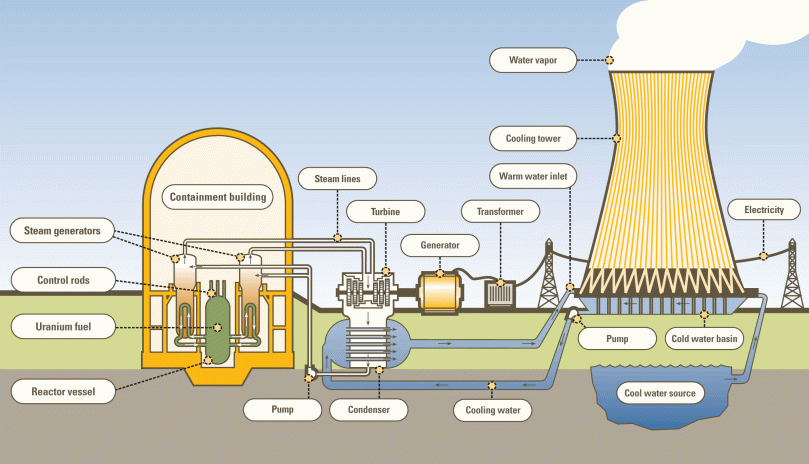
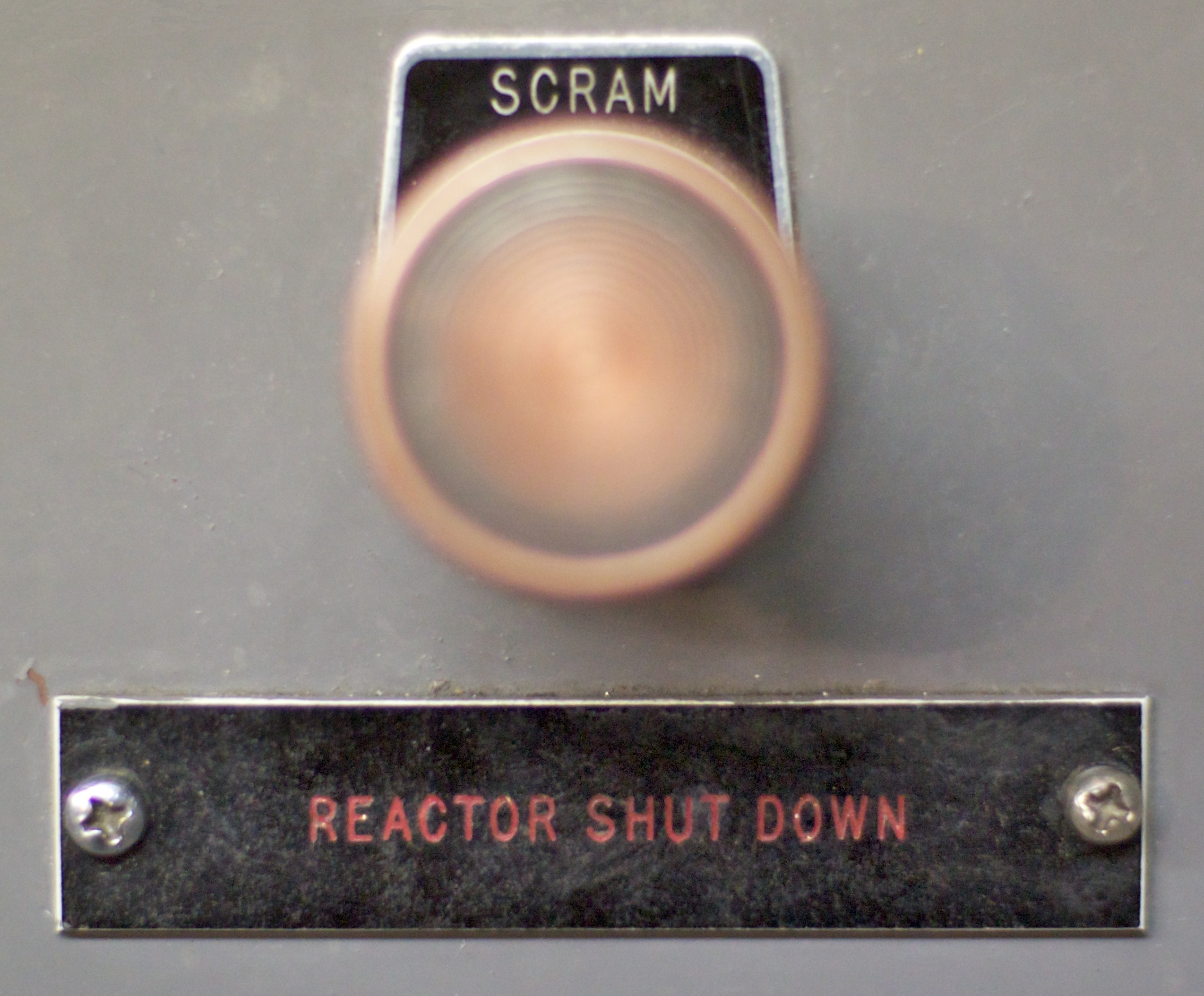 Another mechanism is called SCRAM, which stands for safety control rod axe man. After initiation of this procedure, all of the control rods are inserted to the reactor within four seconds, and the nuclear fission come to an immediate end. However, this doesn’t mean that SCRAM is the ultimate solution to prevent a meltdown. In fact, in all of the accidents that will be examined in the next posts, SCRAM was performed and the meltdown occurred after that. The reason for that is even though the neutrons produced by direct fission is immediately slowed; slower neutrons from the radioactive decay of the products limit the shutdown. Due to this decay, about 7% of the initial power of the reactor remains and then decreases. This heat is called the decay heat, and it is the main reason of most meltdowns. The ultimate shutdown state is the cold shutdown, which means even if the water pressure is readjusted to atmospheric pressure the water doesn’t boil.
 INES Scale
 Claire Dearing vs. Ellie Sattler

